Summer Term 2025
Bring Your Own Data
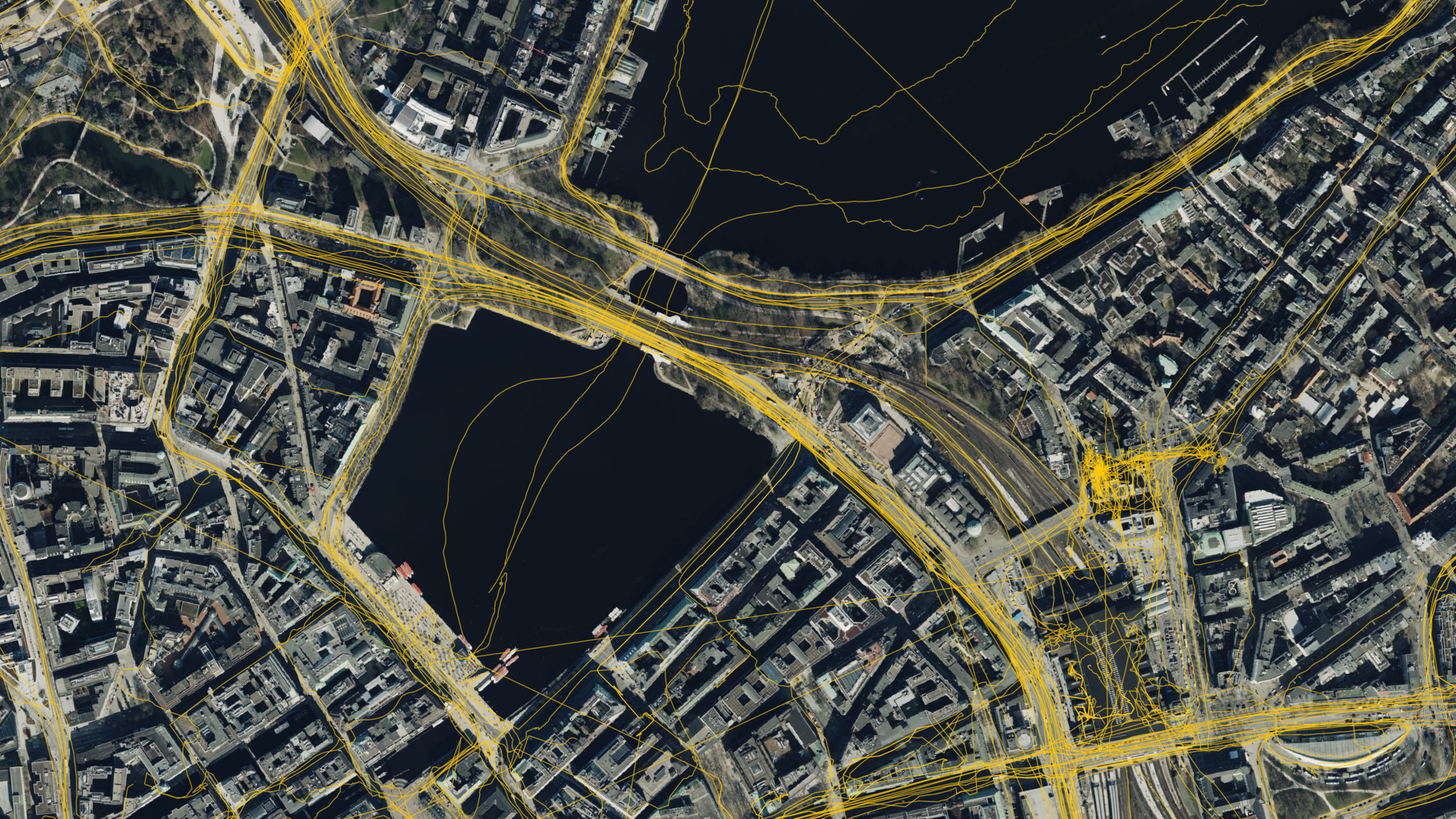
In today’s data-rich world, the ability to generate, interpret, and share data is no longer limited to experts with specialised equipment. Smartphones and other readily available devices now act as easy-to-use sensors, enabling more people to contribute to the creation, exchange, and visualisation of information. In the context of geography and urban planning, this phenomenon is often referred to as Volunteered Geographic Information (VGI).
Digital tools have significantly expanded participation, allowing individuals to describe the world through platforms like OpenStreetMap or Wikipedia. These tools also play a central role in citizen science projects, where individuals actively contribute to the collection and analysis of data for scientific or civic purposes.
Sometimes, we consciously generate geographic data, such as recording our routes during sports activities, knowing we are creating spatial information. Other times, seemingly unrelated actions - like leaving a review on Google Maps - can be repurposed to analyse the qualities of a location or neighbourhood. Additionally, data may be passively collected, such as when traffic sensors count vehicles or pedestrians, adding to a growing pool of datasets without our direct involvement.
In the course Bring Your Own Data, we explored and tested approaches in data generation, with a focus on its applications in urban planning and architecture. We did not only generate datasets ourselves but also discussed the evaluation processes of other sources, such as the city (and their digital participation processes) or other platforms (like Wikipedia or Google Maps). During the semester, groups of 2-3 students worked on a specific topic, conducted a stakeholder analysis and transformed relevant data into information for a clear evidence-based problem statement for developing recommendations for planning.
On this website, we present the results of the seminar and the projects developed by the students.
Contact
Balázs Cserpes | balazs.cserpes@hcu-hamburg.de
Fernando Montaño | fernando.montano@hcu-hamburg.de