Bangkok Tourism

The Impact of Overtourism

History of Bangkok

Bangkok, officially known as Krung Thep Maha Nakhon, became the capital of Thailand in 1782 under King Rama I. With centuries of royal history embedded in its architecture and culture, the bustling capital of Thailand is a city where ancient culture meets modern energy. With its ornate temples, lively street markets, luxurious shopping malls, and world-renowned cuisine, Bangkok offers an unforgettable experience for every kind of traveler. Whether you’re cruising the Chao Phraya River, exploring the Grand Palace, or enjoying the city’s vibrant nightlife, Bangkok is a destination that never sleeps [Source: Tourism Authority of Thailand].

Problem Statement

Bangkok is currently facing the detrimental consequences of overtourism, primarily driven by the concentration of a substantial influx of visitors in a limited number of high-traffic areas. This is exacerbated by inadequate urban planning, insufficient regulatory frameworks, and a heavy economic dependence on tourism. These intercennected factors contributed to significant social, environmantal, and infrastructural pressures, thereby posing considerable challanges to the city's long-term sustainability.

Stakeholders

Tourists

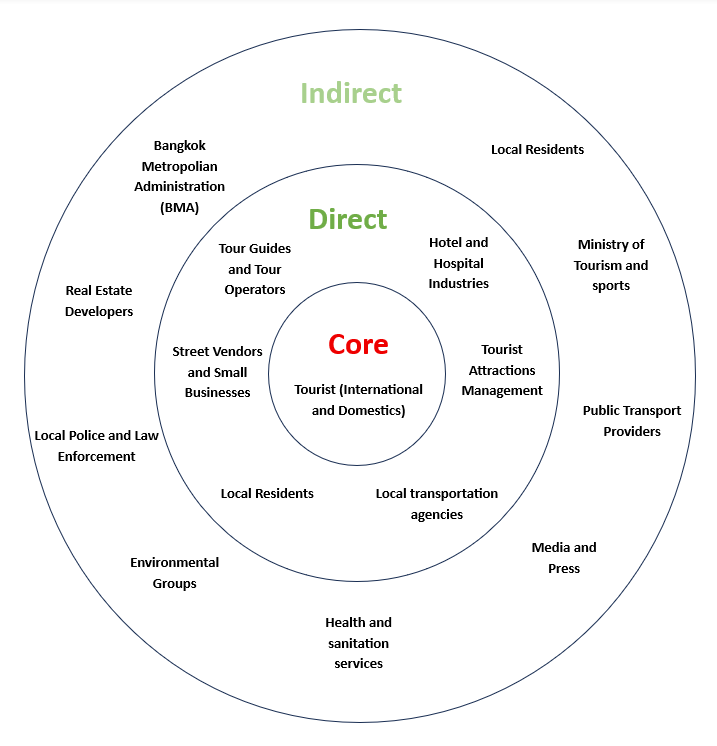
The key stakeholders in Bangkok's tourism ecosystem include tourists, local residents, businesses (such as hotels, street vendors, and tour operators), and public service providers like transport, sanitation, and law enforcement. Government bodies such as the Bangkok Metropolitan Administration and the Ministry of Tourism and Sports play a central role in policy and infrastructure planning, while NGOs and environmental groups advocate for sustainable practices. These stakeholders are interconnected, with tourism providing economic benefits but also creating challenges like overcrowding, rising living costs, environmental degradation, and infrastructure stress especially in high-traffic areas like Khao San Road, Chatuchak Market, and Sukhumvit. [Source: Author 2025]
Indicators of Overtourism

Pollution

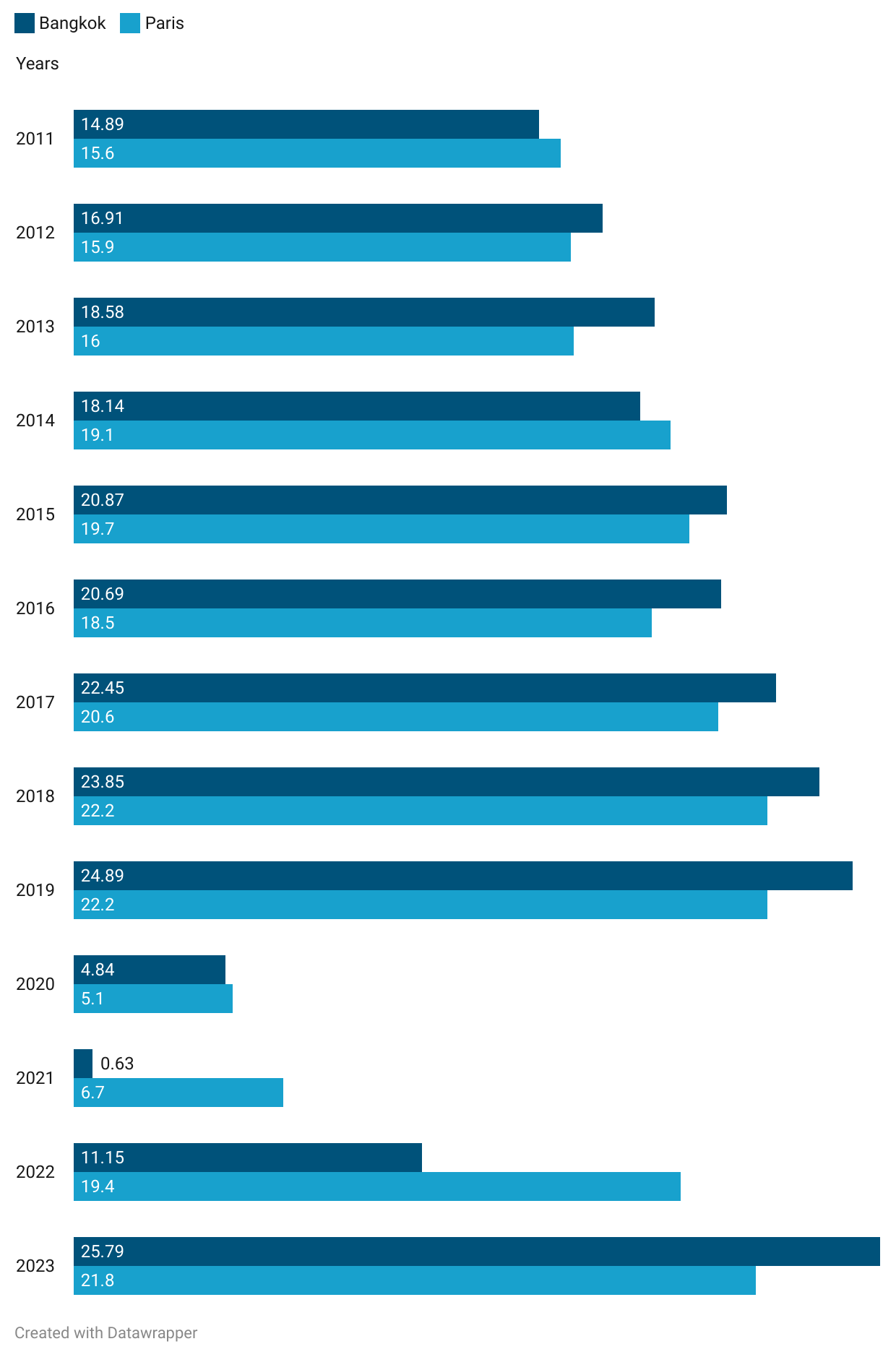
Annual International Tourist Visiting Bangkok vs Paris

This graph illustrates the annual international tourist arrivals in Bangkok and Paris from 2011 to 2023. Despite Paris having a smaller geographical area than Bangkok, Bangkok consistently received more international visitors, particularly between 2015 and 2019, and again in 2023 with a significant surge to 25.79 million tourists. This pattern highlights a growing concern of overtourism in Bangkok, where the influx of visitors places increased pressure on local infrastructure, resources, and daily life. In contrast, Paris, while also a major global destination, has maintained relatively lower tourist numbers, indicating a more balanced tourism load in relation to its size. [Source: Bangkok Tourism statistics - How many tourists visit? (2025). (n.d.). Road Genius]

Infrastructure

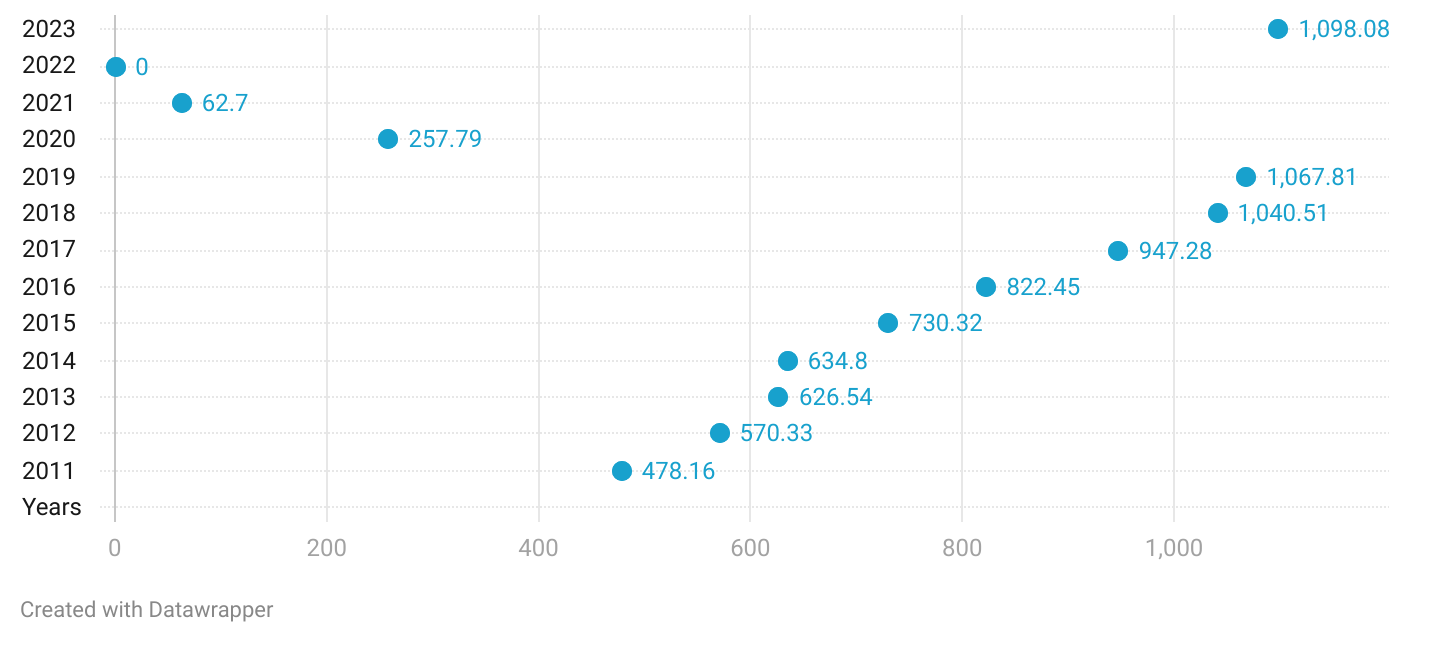
Tourist Spending Money

This graph highlights the crucial role tourism plays in Bangkok’s economy, showing annual visitor spending in millions of dollars from 2011 to 2023. Tourist expenditure steadily increased from $478.16 million in 2011 to a peak of $1,098.08 million in 2023, with a sharp drop during the COVID-19 pandemic in 2020–2021. This recovery and new peak demonstrate how deeply Bangkok’s economy is tied to international tourism. The tourism sector fuels local businesses, hospitality, transport, and retail, making it a vital economic engine for the city. [Source: Statista]

Pollution

Purpose of Visit

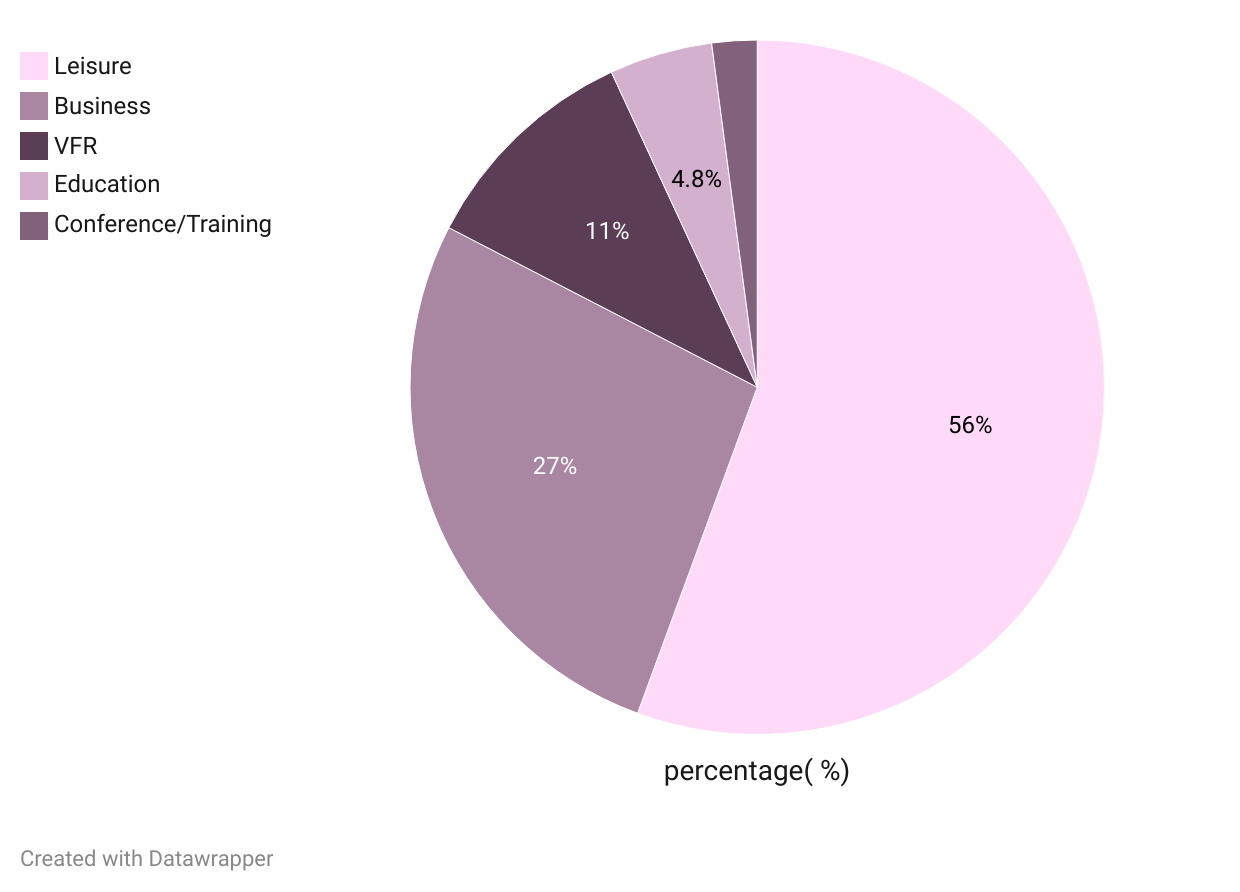
This graph illustrates Leisure was the most popular reason for visitation, making up 55.6% of visits to Bangkok in 2024. [Source:Bangkok Tourism statistics - How many tourists visit? (2025). (n.d.). Road Genius]

Impact of Overtourism

Pollution

Impact on GDP

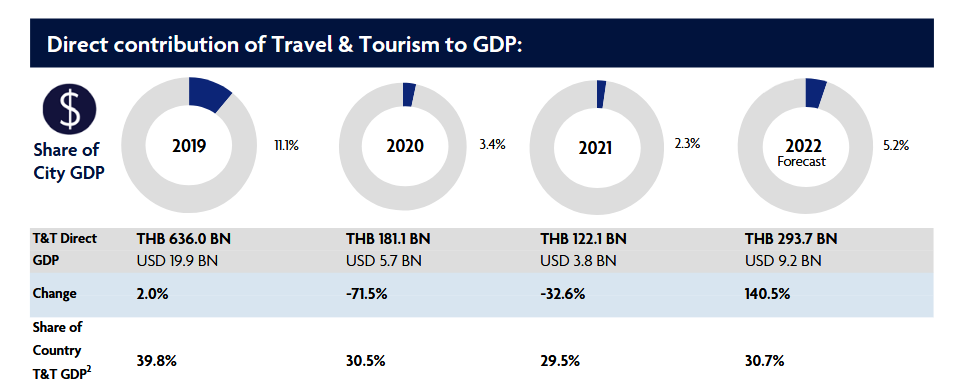
Overtourism in Bangkok has contributed positively to Thailand’s GDP by boosting sectors like retail, hospitality, transport, and real estate. The city’s status as a top global tourist destination has driven high tourist spending, with Bangkok alone generating billions in annual tourism revenue. However, this rapid growth also places strain on infrastructure, increases living costs, and displaces local communities, which can reduce long-term economic resilience. While overtourism adds short-term GDP gains, it can lead to diminishing returns if not managed sustainably. [Source: Bangkok - EIR Factsheet | WTTC Research Hub. (n.d.). https://researchhub.wttc.org/factsheets/bangkok]

Infrastructure

Air Pollution (PM2.5 Levels)

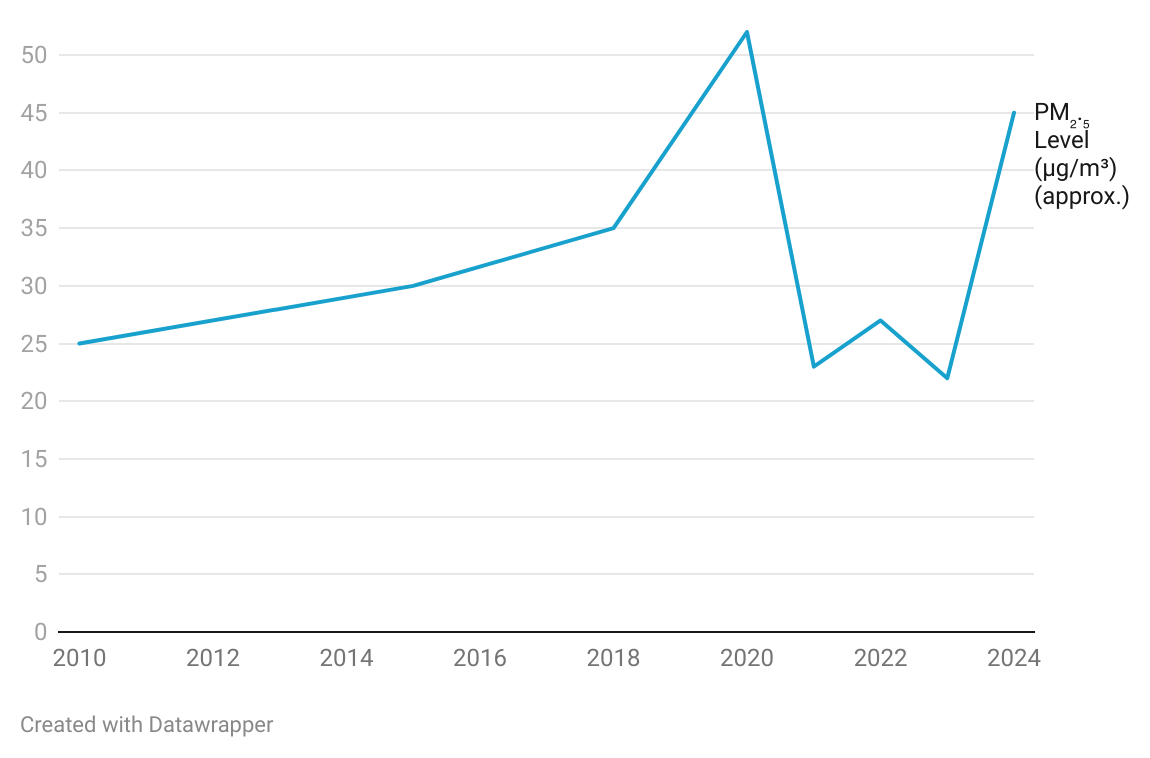
Airborne fine particulate matter (PM₂.₅) is a key indicator of approximate values pollution, exacerbated by tourism through increased flights, traffic, hotel operations, and waste burning. [Source:Sooktawee, S., Kanchanasuta, S., & Bunplod, N. (2023). Assessment of 24-h moving average PM2.5 concentrations in Bangkok, Thailand against WHO guidelines,Robertson, P. (2023, March 3). Bangkok Air Quality – Live Bangkok, Thailand AQI and PM2.5 readings, Thongthammachart, T. (n.d.). PM10 and PM2.5 concentrations in Bangkok over 10 years and implications for air quality]

Pollution

Impact on Land Prices (For Siam Square)

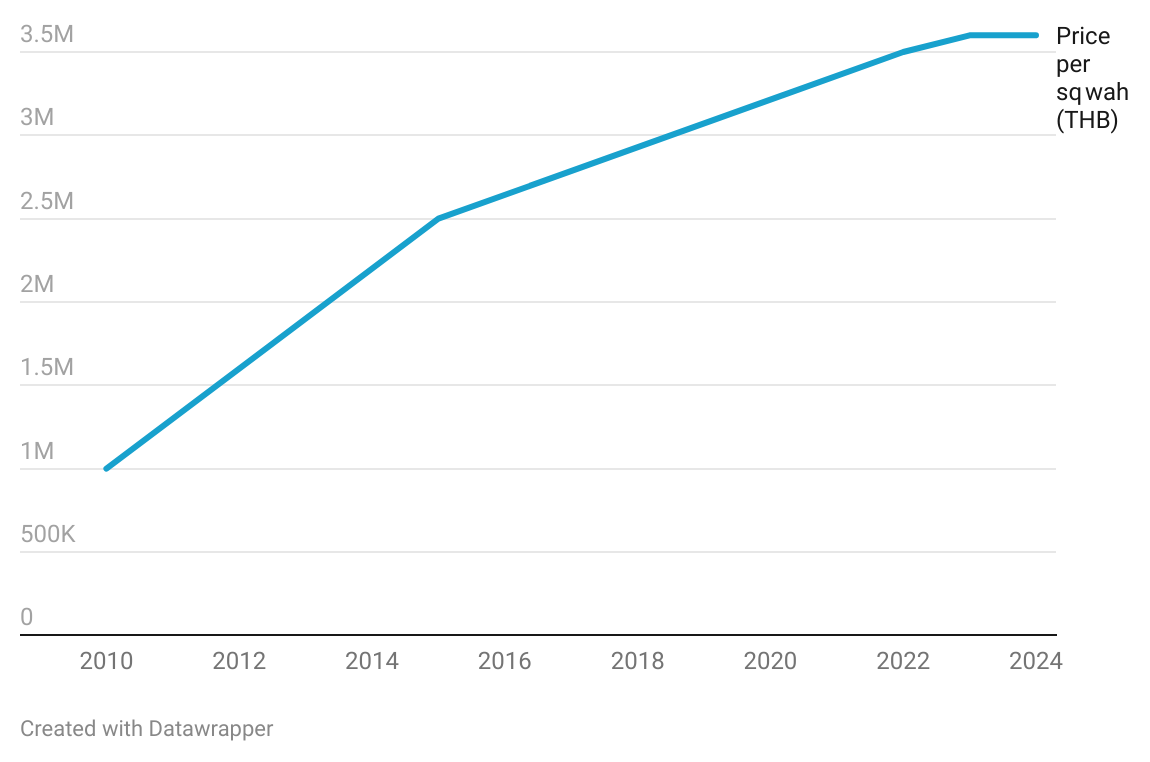
Land prices in Siam Square have increased sharply over the past decade, largely due to overtourism that has driven up demand for commercial space in the area. As one of Bangkok’s busiest shopping and entertainment districts, Siam Square has attracted heavy tourist foot traffic, prompting developers and investors to compete for limited land. Prices rose from approximately 1.00 million THB per square wah in 2015. to a peak of 3.5 million THB per square wah in 2022, particularly in redeveloped parcels. Although recent estimates for 2024 show a normalization to around 3.5 million THB per square wah, Siam Square remains the most expensive land zone in Thailand. This rise in land values illustrates how overtourism can drive up urban land prices, impacting affordability and local land use. [Sources: Beer, L. (2014, January 31). Siam Square tops the country’s most expensive land [Online forum post]. Thailand News, Travel & Forum - ASEAN NOW, nationthailand. (n.d.). Nation Thailand news website, thai news, thailand news, Bangkok thailand, aec, breaking news : Nation Thailand, Webfact, & Webfact. (2024, February 15). Bangkok retail hotspots top land value at 3.75 million baht per sq wah. Thailand News, Travel & Forum - ASEAN NOW]

Method Used

In this study, a combination of official tourism statistics, spatial data from OpenStreetMap (OSM), and air quality indicators was used to examine overtourism in Bangkok. Nine major tourist locations were identified, and amenities such as hotels, cafes, and public transport facilities within a 500-meter radius were extracted using Overpass Turbo. The data was exported in GeoJSON format and visualized using Kepler.gl to highlight spatial patterns of tourism infrastructure shown in our interactive map. Visualization principles such as consistent color coding, clear labeling, and the use of spatial buffers were followed to ensure the results could be easily interpreted.

Resulte and Recommendation

It is observed that tourist-serving amenities were heavily concentrated in specific areas such as Khao San Road, Siam Paragon, and the Grand Palace. These locations showed a significantly higher number of hotels and restaurants compared to local services like clinics or schools, suggesting an imbalance in urban planning. Air pollution levels in high-tourist zones indicated additional environmental stress. Based on these findings, it is recommended that tourism to be decentralized to less crowded districts, that limits be considered for overcrowded attractions, and that urban planning include greater consideration of the needs of local residents. These insights are consistent with global research on overtourism and support current policy goals for more sustainable tourism development in Bangkok.

Interactive Map

Bangkok's top attractions draw millions of visitors each year, underscoring the city's role as a global tourism hub. Leading the list is Siam Paragon, with over 91 million annual visitors, highlighting Bangkok’s strength in luxury retail tourism. Cultural landmarks such as The Grand Palace and Wat Pho welcome around 8 million tourists each, while Khao San Road draws 16 million travelers to its lively backpacker scene. Other hotspots include MBK Center, Chatuchak Market, and Wat Arun along the Chao Phraya River. On the map, yellow dots mark key tourist amenities under 500m radius of tourist place like hotels, hostels, cafés, and public transport nodes supporting Bangkok’s bustling visitor economy

See my interactive map here